Real Estate Investing on the Eastern Shore: Short-Term vs Long-Term Rentals
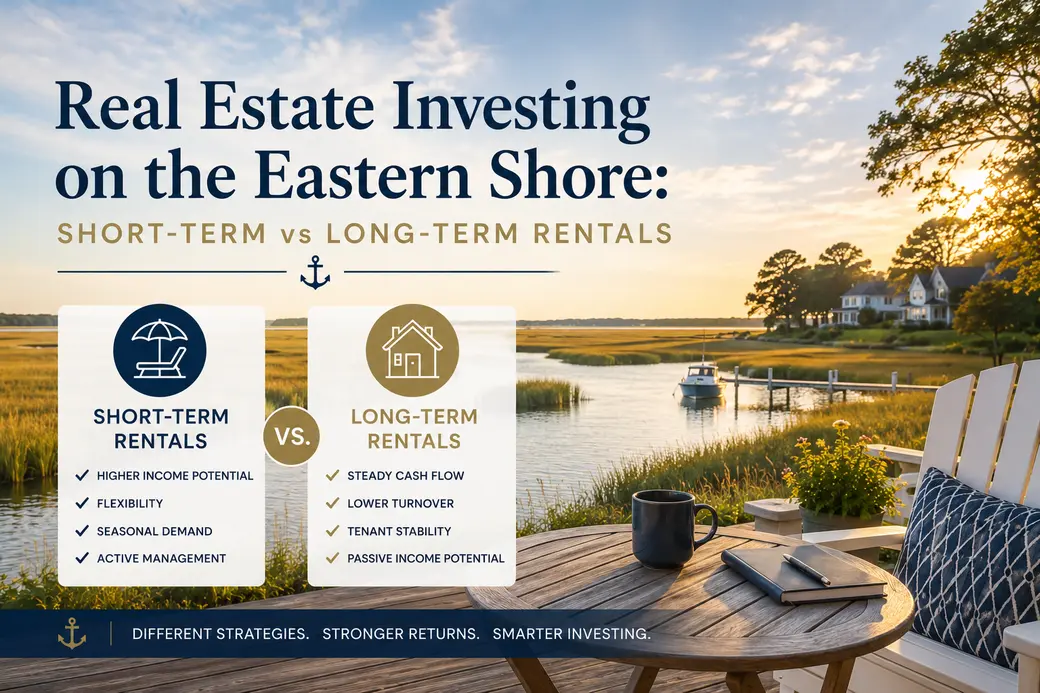
The Eastern Shore has quietly become one of the most interesting investment markets in the Mid-Atlantic. Waterfront scarcity, steady demand from D.C., Baltimore, and Philadelphia, and a lifestyle people will pay to access — it adds up. But before you buy, you face the question every Chesapeake investor has to answer: short-term rental or long-term rental?
There's real money in both. There's also a wrong answer for your specific goals. Let's break it down honestly.
The Case for Short-Term Rentals (STR)
Think weekend waterfront getaways, crabbing trips, and Bay Bridge-close escapes for Western Shore families.
- Higher peak income. A well-positioned waterfront STR can out-earn a long-term lease during summer and shoulder seasons, when Bay tourism is at its height.
- Personal use flexibility. You can block off your own weekends and still generate income the rest of the year — a real perk for a second home that pays for itself.
- Demand tied to lifestyle, not just jobs. People come to the Eastern Shore for the water, the food, and the pace. That demand is durable in a way office-driven markets aren't.
The catch
STRs mean active management, higher turnover costs, seasonality (Eastern Shore winters are quiet), and local regulations that vary by county and town. Always confirm short-term rental rules for the specific jurisdiction before you buy.
The Case for Long-Term Rentals (LTR)
Steady, lower-touch, and built for investors who want predictability over peak-season spikes.
- Reliable monthly cash flow. Year-round tenants mean no seasonal dead months and far easier budgeting.
- Lower management intensity. One lease, one tenant, far fewer turnovers and cleanings than a vacation rental.
- Strong local tenant demand. Workforce housing near the Bay Bridge corridor, Stevensville, and the county seats stays in demand from people who live and work on the Shore year-round.
The catch
Your ceiling is lower. You won't capture those premium summer-weekend rates, and appreciation, not cash flow, often does the heavy lifting on returns.
How to Choose
- Want maximum income and don't mind active involvement (or a management company)? Lean STR — especially for true waterfront with a view people will pay for.
- Want stability, simplicity, and a hands-off hold? Lean LTR — especially for in-town and commuter-corridor properties.
- Buying a second home you also want to enjoy? STR with personal-use blocks is often the sweet spot.
The Eastern Shore Edge
Here's the underlying truth that makes both strategies work: waterfront supply is fixed and demand keeps arriving from across the country. That scarcity protects your downside in a way few markets offer. Whichever path you choose, you're investing in something they genuinely can't build more of.
A quick note: this is general information, not financial or legal advice. Returns, regulations, and taxes vary — run your specific numbers and check local rules before you buy.
👉 Want to know which Eastern Shore properties pencil out best as rentals right now?
Request our free Home Value Offer and investment-snapshot for any property you're eyeing — we'll pull the comps and the rental context so you can decide with real numbers.
Reach out this week and we'll prioritize your investment analysis.
Call David J. Moore & Associates at 410-733-6477 or visit ChesapeakeShoresRealtor.com
Categories
Recent Posts